
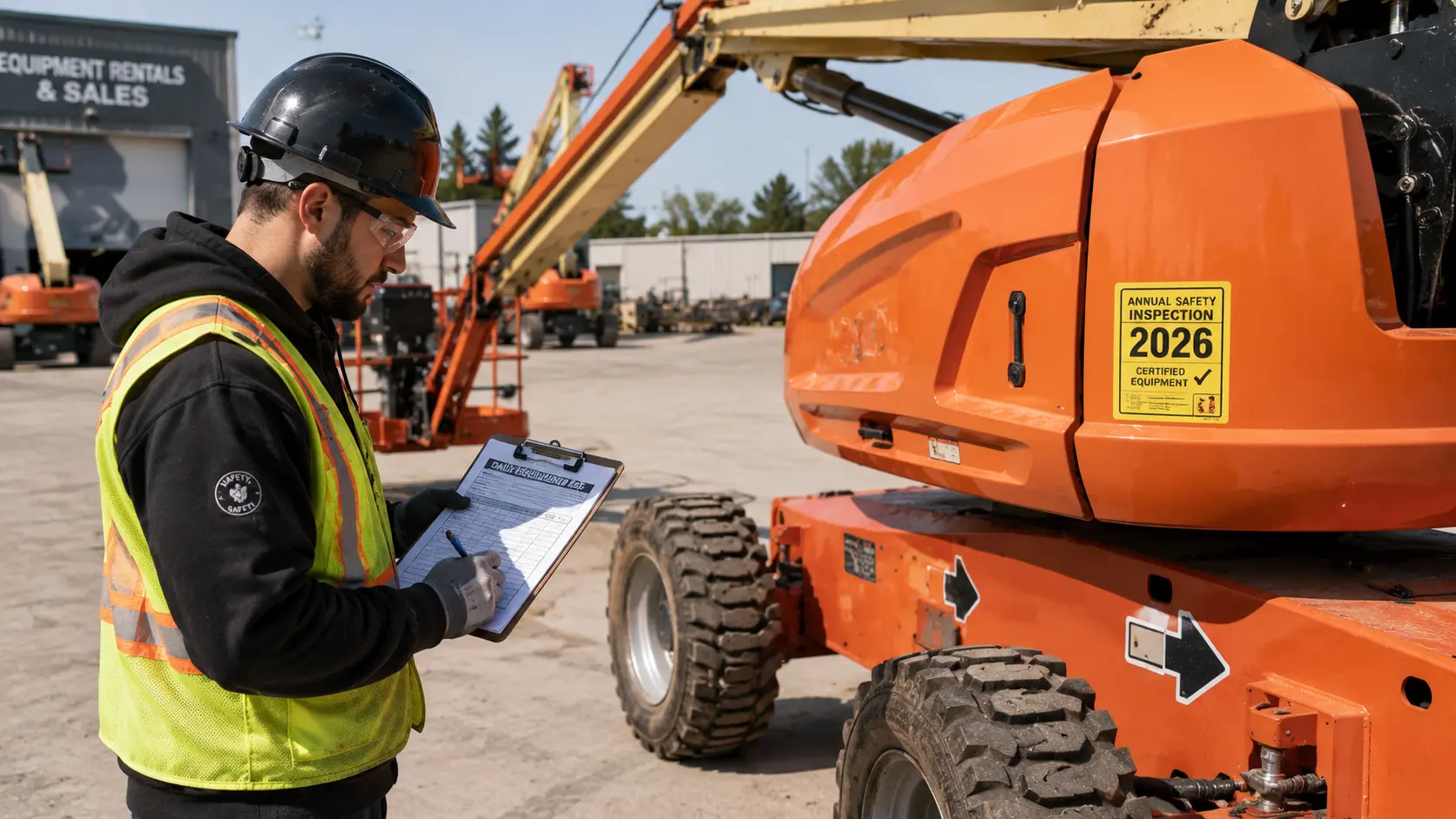
Operating aerial work platforms—including scissor lifts, boom lifts, and personnel man lifts—on commercial, industrial, and residential jobsites in Ontario is governed by strict occupational health and safety regulations. Equipment owners, rental companies, employers, and equipment operators share legal responsibilities to ensure all elevated access machinery is maintained in safe operating condition.
Regulatory Advisory Notice
The information below provides a general overview of structural inspection frameworks and best practices. Specific regulatory clauses, mandatory inspection intervals, and compliance requirements are governed by Ontario legislation (including the Occupational Health and Safety Act, O. Reg. 213/91 for Construction Projects, and applicable CSA B354 standards). Equipment owners must verify current regulatory standards directly with the Ontario Ministry of Labour, Immigration, Training and Skills Development.
The Three-Tier Inspection Framework
In Ontario, workplace safety protocols establish a structured, three-tier inspection model to ensure mechanical and structural safety:
1. Daily Pre-Shift Inspections
Prior to the start of each work shift, a qualified and trained operator must conduct a visual walkthrough and functional test of the machine:
- Visual check for fluid leaks (hydraulic oil, engine coolant, battery acid).
- Inspection of tires, wheels, and pothole protection mechanisms.
- Functional test of all operating controls, emergency stop buttons, horns, and backup alarms.
- Verification of emergency manual lowering systems from ground level.
- Confirmation that the operator manual is stored in the weather-resistant compartment on the platform.
2. Periodic Maintenance & Service
Scheduled service intervals recommended by the original equipment manufacturer (OEM) must be carried out by trained mechanics. This includes hydraulic filter replacements, battery cell load testing, chassis lubrication, torque checks on critical fasteners, and sensor calibration in accordance with CSA B354 maintenance standards and manufacturer service manuals.
3. Certified Annual Structural Inspections
Aerial lifts must undergo a comprehensive annual inspection performed by a certified technician or professional engineer. This inspection involves:
- Non-destructive testing (NDT) or thorough visual inspection of all critical structural welds, pins, and bushings.
- Pressure relief valve testing and hydraulic cylinder holding tests.
- Verification of load sensing calibration and tilt interlock systems.
- Application of an annual safety inspection decal and formal sign-off in the equipment logbook.
Equipment Logbook & Record-Keeping Requirements
Every aerial work platform operated on an Ontario construction site must maintain an active equipment logbook. The logbook must document all pre-shift checks, scheduled maintenance, repair history, structural modifications, and annual inspection certificates. Failure to produce a complete logbook during a Ministry of Labour site inspection can result in immediate stop-work orders and compliance notices.
Buying Inspected Fleet Equipment
When purchasing used equipment, buying from an active rental fleet ensures the machine arrives with verified maintenance history and compliant annual safety records. Learn more by reviewing our pre-purchase equipment inspection checklist.