
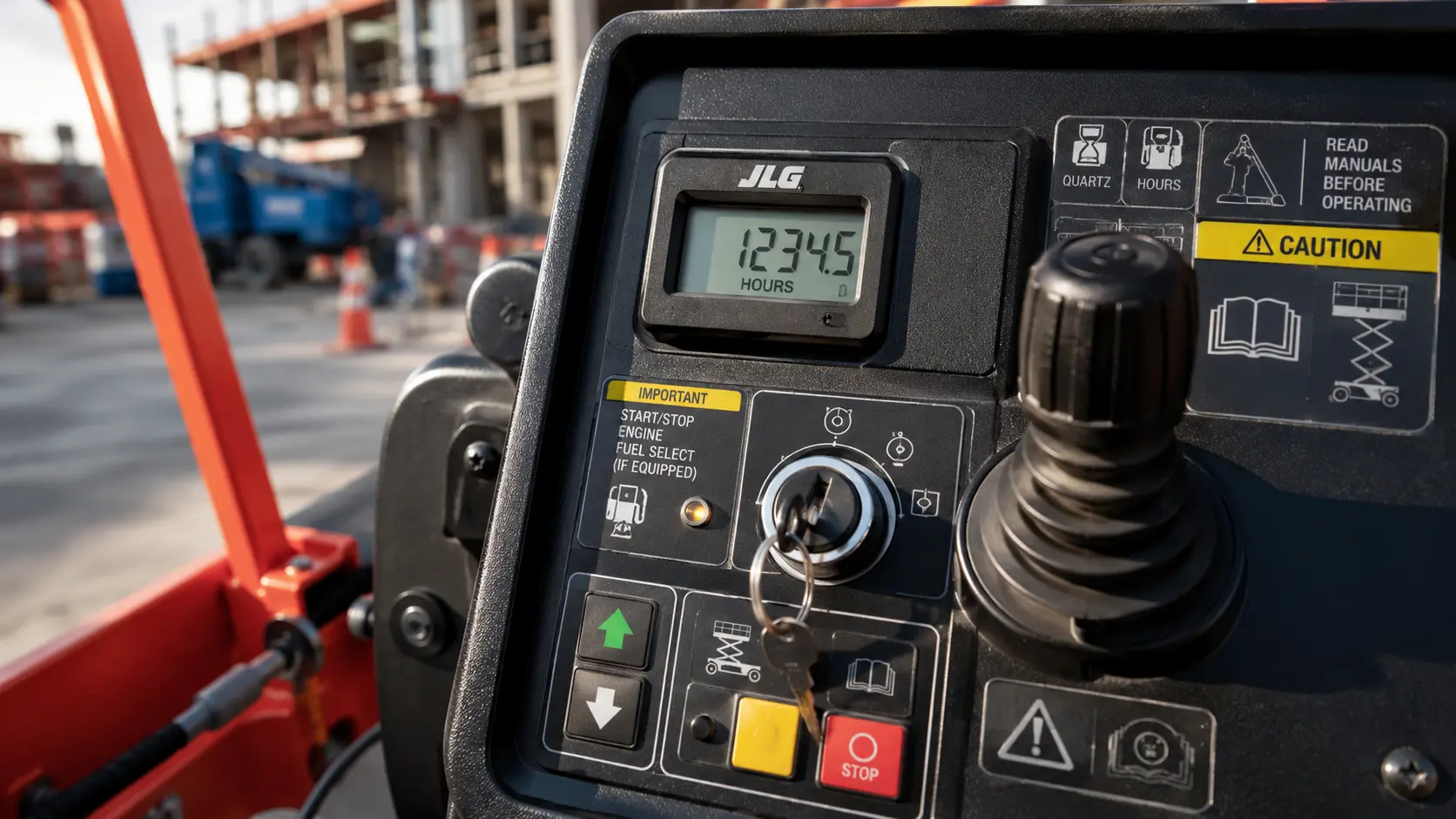
When evaluating pre-owned aerial work platforms, equipment buyers frequently look at the hour meter as the single definitive gauge of machine health. In the world of commercial scissor lifts, however, raw hour counts tell only a fraction of the story. Understanding how hour meters operate, the fundamental differences between electric and diesel drivetrains, and the paramount importance of documented maintenance is essential before signing a purchase agreement.
What Does a Scissor Lift Hour Meter Actually Measure?
Unlike highway vehicles that measure total distance traveled, aerial work platforms utilize electric or mechanical hour meters. Depending on the manufacturer's wiring configuration, the hour meter may record:
- Key-On Time: The total time the ignition key switch has remained energized, regardless of whether the machine is actively lifting or driving. On busy commercial sites, operators frequently leave the key engaged throughout an entire 8-hour shift while working from a static platform, inflating the meter without adding mechanical wear.
- Pump Motor / Drive Engagement: Advanced electronic controllers record only when the hydraulic pump motor or electric drive motors are actively drawing current under load.
Because key-on time frequently overstates actual mechanical duty, a machine showing 1,200 hours may have experienced significantly less physical wear than an unmaintained unit showing 600 hours of heavy industrial use.
Electric Slab vs. Rough Terrain: Why Hours Wear Differently
Electric slab scissor lifts operate with minimal moving parts: a solid-state battery bank, an electric motor driving a hydraulic pump or electric transaxles, and hydraulic cylinders. There are no engine pistons, transmissions, timing belts, or exhaust systems. Consequently, an electric slab machine with higher hours that received timely battery watering, clean hydraulic fluid, and proper grease lubrication remains in outstanding operating condition for years.
By contrast, rough terrain diesel scissor lifts endure internal combustion thermal cycles, particulate exposure from dusty jobsites, and constant strain on 4WD differentials and transfer cases. On RT models, engine hour logs and fluid analysis are far more critical. For a broader comparison of equipment costs across Canada, see our guide on how much used scissor lifts cost in Canada.
5 Essential Maintenance Questions to Ask Before Buying
Instead of focusing solely on the hour meter, ask the seller the following diagnostic questions:
- What is the verified age and load test condition of the battery pack? Deep-cycle 6V or 12V batteries typically deliver a multi-year service life under proper maintenance. A dead battery pack represents an immediate replacement cost.
- When was the last certified annual structural and mechanical safety inspection performed?
- Are there any signs of hydraulic drift or cylinder rod scoring? When elevated to full working height with test weight, the platform should hold position firmly without creeping downward.
- Have the scissor stack pivot bushings and steering kingpins been regularly lubricated? Excessive lateral play in the scissor stack indicates worn bushings.
- Are full maintenance logs and service history available for review?
The Final Verdict: Hours vs. Condition
In summary, there is no arbitrary hour cutoff that renders a used scissor lift unusable. A well-maintained ex-rental unit with complete maintenance history will consistently outperform a neglected low-hour machine from an auction yard. For a step-by-step physical inspection framework, explore our comprehensive pre-purchase aerial lift inspection checklist.