Material handling is the lifeblood of construction jobsites, industrial lumber yards, and agricultural operations. When deciding on heavy lifting equipment, contractors frequently debate between a traditional straight-mast forklift and a telescopic handler (telehandler). While both machines lift palletized materials, their mechanical capabilities, reach geometry, and site versatility differ dramatically.
Core Distinction: Vertical Lift vs. Forward Telescopic Reach
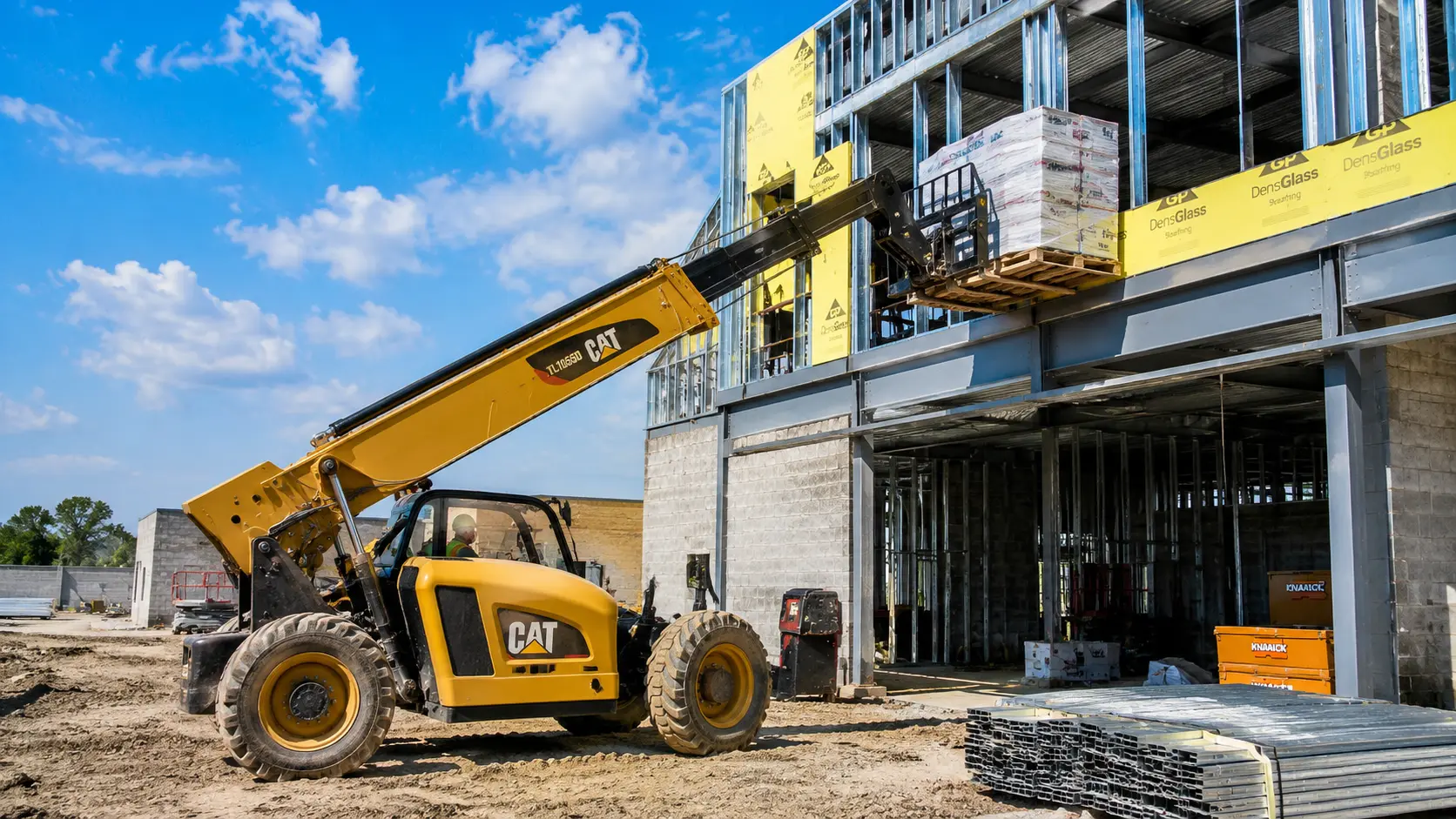
A traditional straight-mast forklift lifts loads strictly along a vertical axis. It requires the front bumper to be parked directly adjacent to the landing point. In contrast, a telehandler combines the forklift carriage with a crane-like telescoping boom, providing both high vertical elevation (typically 42ft to 56ft) and substantial forward horizontal reach (up to 30ft or more).
This forward reach capability allows telehandler operators to place pallets of framing lumber, drywall, roofing shingles, and masonry directly onto third-story building decks, over deep foundation excavations, or across flatbed trailers from one side of the vehicle.
Understanding Load Charts & The Physics of Forward Reach
The most crucial operational aspect of a telehandler is load chart physics. While a machine like a JCB 509-42 may have a maximum rated capacity of 9,000 lbs with the boom fully retracted, this capacity decreases significantly as the boom extends horizontally.
Due to the mechanical law of leverage (torque = force × distance), extending a heavy load forward shifts the center of gravity away from the machine's front axle fulcrum. Operators must always reference the cab's load chart to ensure the payload stays within safe stability envelopes at specific boom angles and extension lengths.
Rough Terrain Mobility & Steering Modes
Telehandlers are engineered from the ground up for rugged, unpaved jobsites. Standard features include:
- Four-Wheel Drive & Planetary Axles: Exceptional tractive effort through mud, deep snow, and loose gravel.
- Three Steering Modes: Front-wheel steer for highway roading, four-wheel circle steer for tight turning radiuses, and crab steer for lateral positioning along building walls.
- Frame Leveling (Sway Control): Allows the operator to level the entire chassis horizontally on side slopes prior to lifting.
Attachment Versatility
While a straight-mast forklift is primarily limited to pallet forks, a telehandler functions as an all-in-one jobsite utility tool through hydraulic quick-attach couplers. Popular attachments include:
- Standard and side-tilt pallet forks
- Material buckets for dirt, gravel, and snow clearing
- Truss booms for placing roof trusses and structural steel
- Hydraulic sweeper brooms for site cleanup
Explore available used telescopic handlers on our telehandlers for sale page, or review our used aerial equipment inspection checklist before purchasing.